


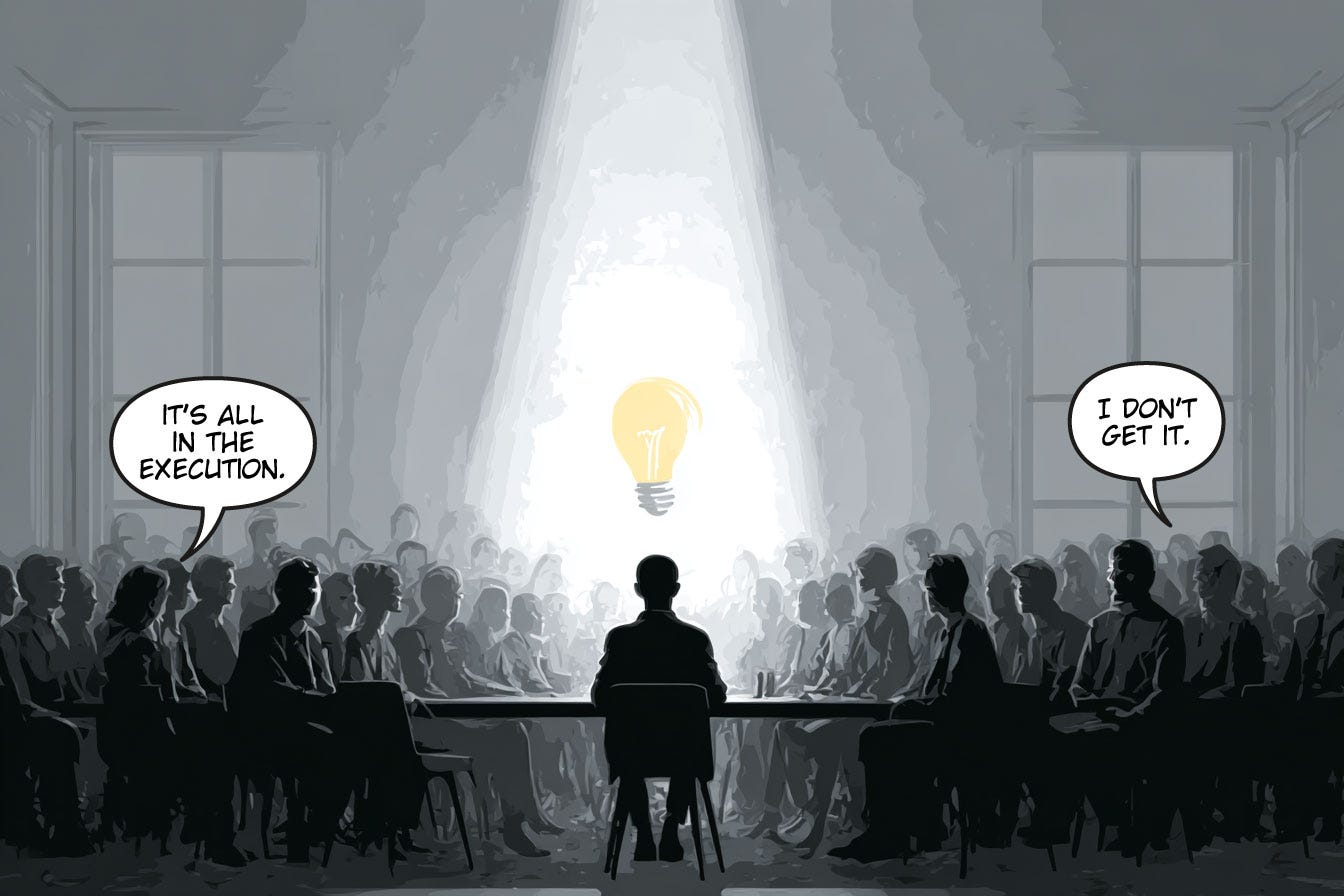
There will come a time in your career when you discover that the total of your experience, beliefs, and convictions will become crystallized in your mind. It will be so clear to you that stepping outside of that vision will simply seem like walking around in the dark, trying to find the source of a fart.
It will be here, ladies and gentlemen, where you realize that no one on this planet will ever match or exceed your enthusiasm for a project you believe in.
You can lobby them hard to get them on board, and you might even succeed. You can make your case so clearly that only a fool could see it any other way, but alas, they still will not rise to the occasion in any meaningful way.
It’s a strange paradox in the entertainment industry. It makes no sense that you could conceive of an idea or story so moving, to you anyway, and find it impossible to recruit an ally or two who is married to your vision.
It’s not to say that people don’t love ideas, scripts, and pitches. No, they do, but they love what they see in it, not what you see. So great is the idea that it lights a fire in the hearts of others. Yes, a fire — but a different fire. Not the same fire. And it will never be the same fire.
I’ve been on both sides of this predicament. When someone pitches me an idea I really like, I am the first one to tell them why I like it. I might recognize that it’s a high-concept idea, or a well-developed story narrative, but what sparks in me is the parallel universe in which your idea lives in my brain.
If a story complication is pitched to me that is so good I can start shouting scenes out to you instantaneously, it might look like I am building you up. I suppose I am in my own way, but what I am responding to is my reaction. Often, what I will tell my friends or mentees is something like this.
“You know where I really thought you were gonna go with this…?”
Then I would pitch them my version of their story. I’m not a monster, so afterward, I help them craft their story in the way they want it. It’s their story, after all, but my enthusiasm is for my version of their story. Not theirs. And any enthusiasm I have left over will be for the writer to do justice to the idea they want to write.
Now, this is a microcosm of the entire entertainment industry. It’s collaborative. Everyone wants to put their stamp on the project. They must collectively piss on their little corner of it to let people know they were there. Some people describe this as justifying their position, but it’s more than that. They want to be a part of the creative process, and that’s as it should be.
Problems arise when the visions are vastly different. Two conflicting visions, and you will find yourself in a power struggle. You may win, you may not, but someone’s vision will prevail. For better or for worse, the project will survive. Three or more visions? You are doomed.
Case in point.
In the fall of 2003, I was going around to producers to pitch a TV show for the cable networks set in an area of the Angeles National Forest that was infamous for being a body dumping ground for serial killers and murderers. The show was called Angeles Crest.
It was a spooky show about a man whose wife had been kidnapped as a result of a home invasion. As the weeks and months dragged on, he was quite certain she was dead, but her body was never recovered.
His life completely cratered, and just at the point that he was at his wits’ end, a woman arrived at his door. She claimed to be a psychic medium who could communicate with the dead. She was hiking in the Angeles National Forest and felt a strong connection to a woman who ultimately led her to his door.
He couldn’t believe it. It must be a scam. This woman was trying to bilk him out of his money. Only when she brandished the scarf his wife was wearing when she was kidnapped did he finally believe that she made a genuine connection to his wife.
He took the scarf in his hands and found himself pulled back into the darkest parts of his grief. He sent her away. So much grief and fear consumed him that he burned the scarf immediately to put an end to his torment.
The next day, he regretted his actions and sought the woman out. When she asked for the scarf, he admitted he burned it. Now, without the connection to her body, they were back at square one.
Undeterred, she made a deal with him that whatever body they found, they’d have to follow the trail wherever it led. Thus began the adventure of finding bodies in the Angeles National Forest, which was two and a half times the size of Manhattan, and reconnecting them with their families, etc. The next body might be his wife, or it might not.
This was the type of stuff I was writing. I loved supernatural shows, and while this was well before wildly successful shows like Ghost Whisperer and Medium, I felt like this would be great television.
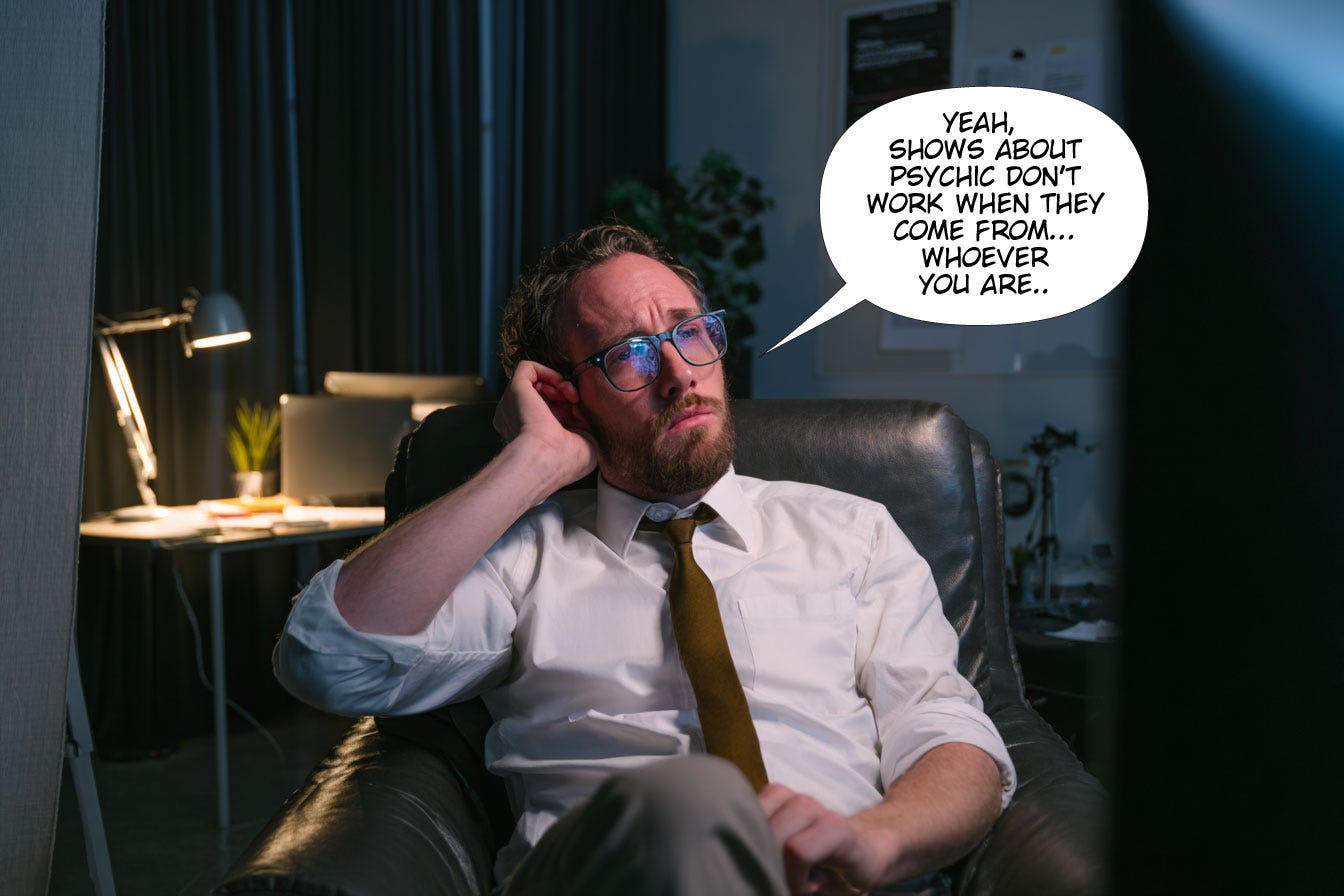
I pitched it around town, and while it got some interest, I was mostly told that shows about mediums and psychics didn’t work. Which was true. Until they did.
I eventually met with a producer who was a former head of a cable network, who knew all the major players at the TV studios and networks. I pitched him the idea, and he flipped. He loved it.
I know now what he really loved was his version of my idea. He knew CBS was looking for a spooky show, and Angeles Crest could be that show.
This sent me over the moon. I was very naïve and green in my writing career. I had one movie under my belt that had yet to be released, but had made a splash earlier in the year at Sundance.
To say I was highly motivated was an understatement. Working with this producer, he told me that this idea would not work as a supernatural psychic show, but would work as a show about cops who investigate murders in the Angeles Crest area.
This wasn’t my idea, but I believed I could make that work. It turns out Forest Rangers patrolled the Angeles National Forest, and they worked in concert with the Sheriff’s Department to investigate any criminal cases. It was a perfect situation.
So, I wrote up a pitch based on this new angle, and we ended up going straight into the network to pitch it to the head of CBS. In case you’re wondering, no, this was not a normal thing. Nothing about this was normal, but there was a small window of opportunity, and this was the way we were going to make it happen.
No star attachments, no eight-hundred-pound gorilla. Just the former head of a cable network and a very green, naïve writer.
Long story longer, we sold the show in the room to the network. Amazing. Now what? We had no studio, so we had to lay off the show onto a studio, which was a great problem to have. What wasn’t great was that studios hated this as they were coming in behind the eight ball and didn’t feel like their imprint was on it.
We found a studio, deals were negotiated and signed, and then the actual work began of crafting the pilot for Angeles Crest.
We now had four cooks in the kitchen, and wouldn’t you know it, all the visions were heading in different directions.
I wanted a scary, sharp, edgy cop show, using the landscape to build the horror of the premise. I wanted a deeply flawed lead who made mistakes and was frequently knocked back by the enormity of his grief.
My producer told me that the lead and the team did not, and will never have, flaws. They were superheroes. They didn’t stumble. They were flawless.
Womp. Womp.
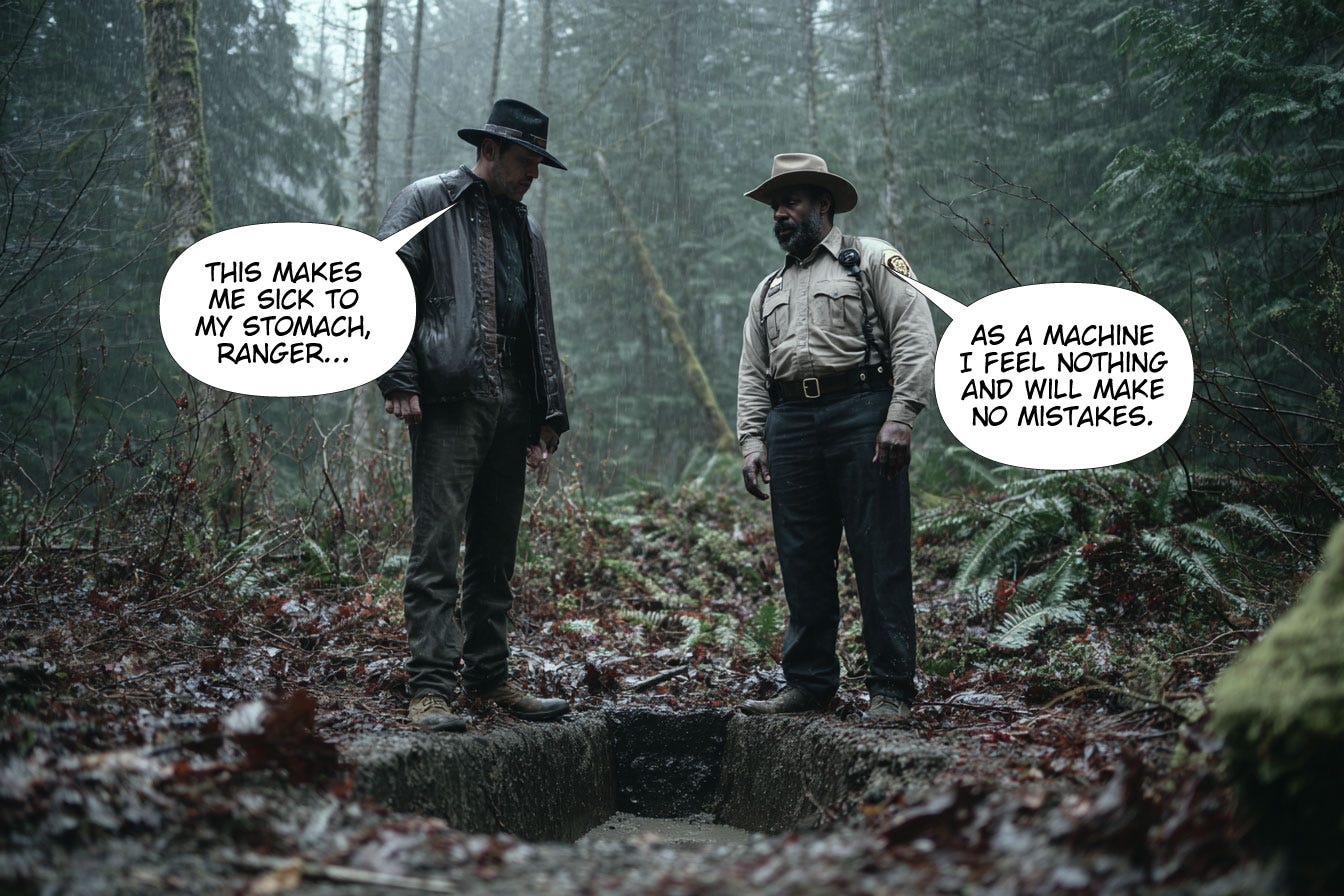
The TV studio wanted a more middle-of-the-road cop show, which didn’t excite me, but I could deal with it. The network came back and said what they wanted was CSI in the Mountains.
That’s not what they bought, but that’s what they wanted. I felt my soul drop out from under me. They wanted to take my edgy drama series and turn it into a show for their target audience, who at the time had an average age of 87.
Get ready, get set, GO! Write a pilot!
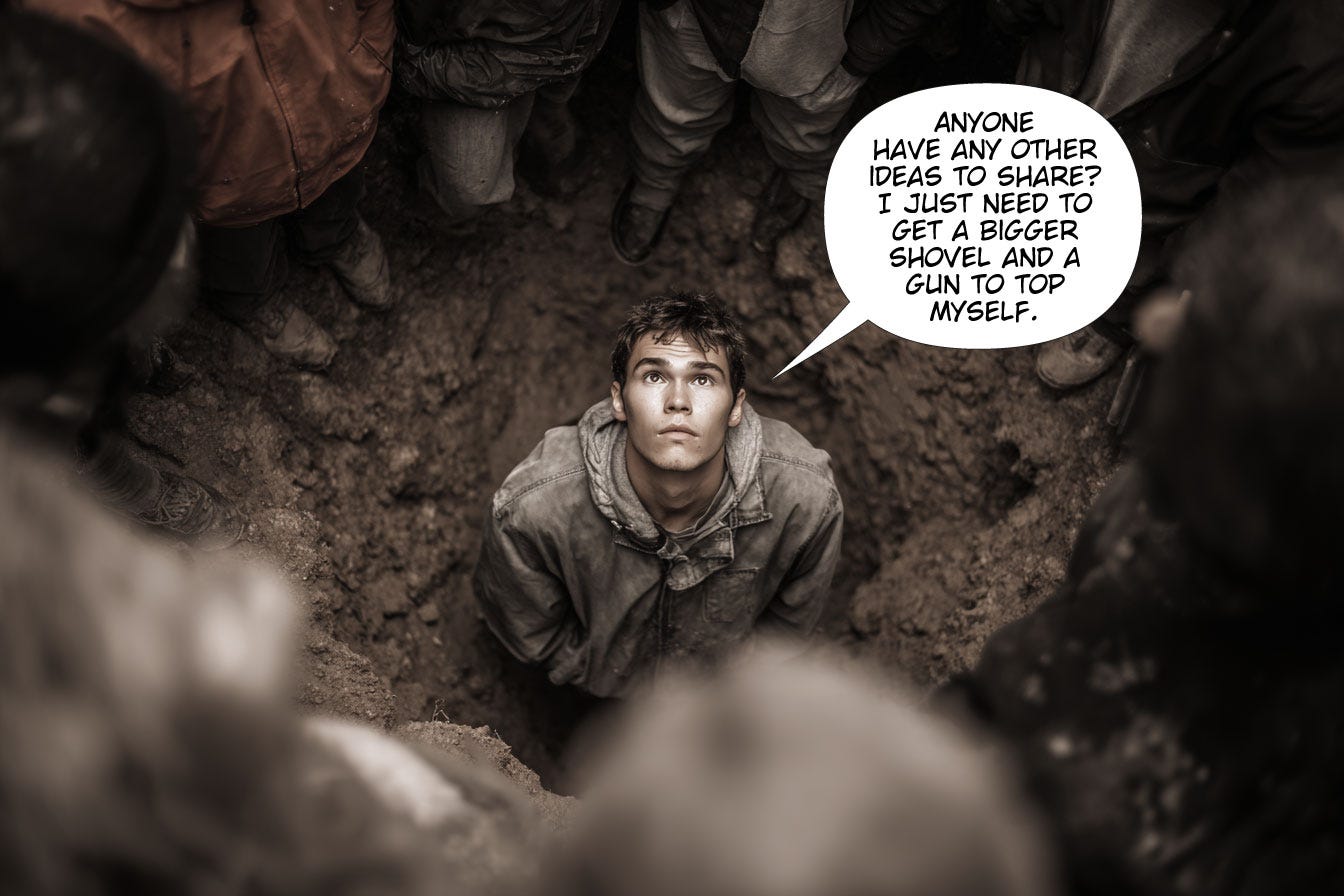
What followed was a disaster. Every single note yanked the story in a different direction until it pulled itself apart. There was no way to make this work without disappointing someone. The pilot had moments, but failed to entertain on just about every level. I turned it in. They did not select it for filming, and I sat back afterward, wondering what in the hell happened?
We didn’t have two conflicting visions; we had four! Twenty-three years later, I look back and ask myself what I would do differently. You could try to reach consensus on the vision for the show, but that, it turns out, is also a moving target.
The worst part of this fiasco? Not only did no one match my enthusiasm or vision, but the process killed my initial enthusiasm altogether.
So, what’s the point, you ask?
It’s not about being so rigid in your view that nothing gets done, but knowing that your vision is yours alone. Getting others to get on board with it only comes when you’re the 800-pound gorilla in the room, and that might just be your folly. Collaboration is key, but just understand its nature.
And also, if CBS tells you they want a spooky show, don’t believe them. Ever.