



The short version. Almost everyone sucks at it.
You’ve read about it, you’ve seen it dramatized in movies and television. The story pitch is one of the most mystical and mysterious things in the entire industry. Why? Because it stands between you and all the fame and fortune owed to you by this despicable business.
Well, not really. The fantasy is that you go into a room to pitch a studio, a producer, or an actor. You spin a yarn so compelling and satisfying that they crack open their checkbooks and buy it in the room. Hell, they loved you so much, you’ll probably end up with one of those development deals where the studio pays you to develop projects they have no intention of making.
For most people, this is a fantasy. And as I will explain, if you sell a pitch in the room, I will bet money there were other highly lucrative factors involved.
Let’s back up a bit.
Pitching your stories is an essential skill that all writers must possess to be successful, but probably not for the reasons you think. If you think it’s so you can sell an idea in the room, believe me when I tell you that it is probably near the bottom of the list.
The ability to pitch a solid idea, story, or long-form TV series is a foundational skill. It reveals to your audience that you know what a story is and why yours is important. I believe all creative people should learn this skill, and the sooner, the better.
Not only does it illustrate your grasp of story structure, but it also helps you to refine your existing ideas so they are more complete. If you’ve listened to a lot of pitches, one of the most common things you will find is your desire for them to get to the point. Conversely, that is what they want from you. The essence of your story.
It should be clear, concise, and compelling. If you ramble on about setting, inspiration, and characters for too long, your audience will check out.
You might even know, if pressed, what the core themes and complications of your story are, but if you don’t present them, no one will hear them.
Distilling your idea down to a logline isn’t just for a development executive’s benefit. It’s actually for yours. If the story elements aren’t there, your logline will suck.
Example. Here’s a story idea I literally just pulled out of my — er, thin air…
The Right To Remain is a thriller about a cop who must bring down a drug trafficking ring in Chicago.
Okay. A cop movie. Yay. I love cop stories, but I don’t really care about this one. Why?
It’s uninspired. Unoriginal. I know nothing about the characters. There is no story complication. If you pitched this idea, it’s likely you would give me a laundry list of things the cop does and throw in some badass set pieces, but it wouldn’t add up to anything. It wouldn’t be a story.
The reason why people hook onto a story pitch is that they fall prey to a strong complication. In other words, the story dilemma is clear.
I know what you’re thinking. What do you mean? Story Dilemma? Story Complication? I don’t get it.
Sometimes, story complications are expressed through a story theme. Something like “blood is thicker than water,” or “Charity begins at home.”
They don’t represent the plot. They represent the moral dilemma or story complication inside the plot, which makes it a story.
For example, a medical researcher dedicates her life to finding a treatment for a lesser-known and underfunded disease. She works tirelessly and wants to help the world. The story complication is that her long work hours force her to miss quality time with her family, and she doesn’t see the pitfalls ahead. If she put her focus more on helping her family, she could avoid it. The powerful pull of her research and her family creates a strong dilemma you can use to create conflict.
Let’s get back to the cop story. Let’s change the logline to reflect a strong story complication.
The Right to Remain is a psychological crime thriller about a self-serving, crooked vice cop who loses a niece to a drug overdose and is tasked with taking down the drug lord responsible, knowing his crooked connection to him puts his life and career in jeopardy.
Okay, better. Now, we have a troubled cop who has a dilemma. He’s a selfish vice cop on the take who’s looked the other way for years, and now that has led to the death of a young woman he knows and cares for. He can take down the man responsible, but it will destroy his reputation and career.
The complication? Is he willing to sacrifice himself to do the right thing or remain the same selfish person who looks the other way to line his pockets?
How would you crank up this dilemma even more?
What if the cop was over-leveraged? He took blood money to keep his sister’s restaurant afloat. He’s not a totally bad guy. His ability to pay off these debts means taking money from criminals. So, his choice to take down the drug lord is more than just about his reputation. It affects others.
You can see how this builds from just having a solid complication up front. The simple exercise of writing a logline helped to craft a story dilemma big enough to hang a story on.
Now, granted. My example isn’t exactly an award-winning idea. It’s derivative and basic. The point is to have a moral dilemma. That’s the reason people read books, watch movies, or listen to stories. They want to experience your story through your characters. They might not be a crooked vice cop, but they definitely know what it’s like to choose family over careers or some variation.
At the very basic level, your elevator pitch doesn’t have to tell the entire story. It only has to give us the complication. Who is the story about? What do they want? And what’s at stake for them if they fail?
That’s basically it. If people pitching stories started from there, their storytelling would be miles above the status quo.
Example…
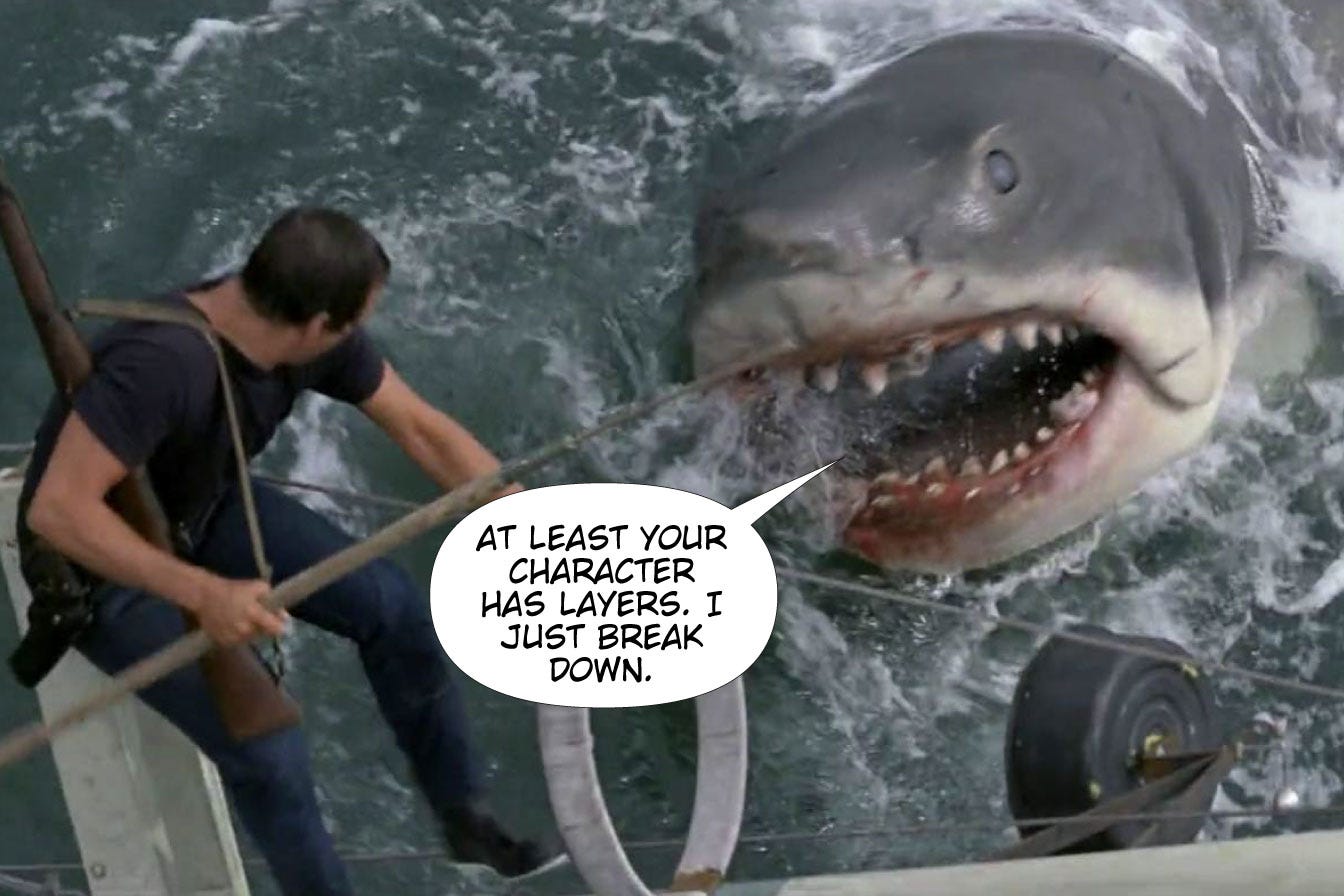
Chief Brody in Jaws has to catch and kill a shark in a small beach town. That describes what happens, but that’s not the story. His dilemma is twofold. He needs to stop it before it ruins the town’s entire tourist season and, oh yeah, he’s afraid of the water. The dilemma makes it a story.
Example…
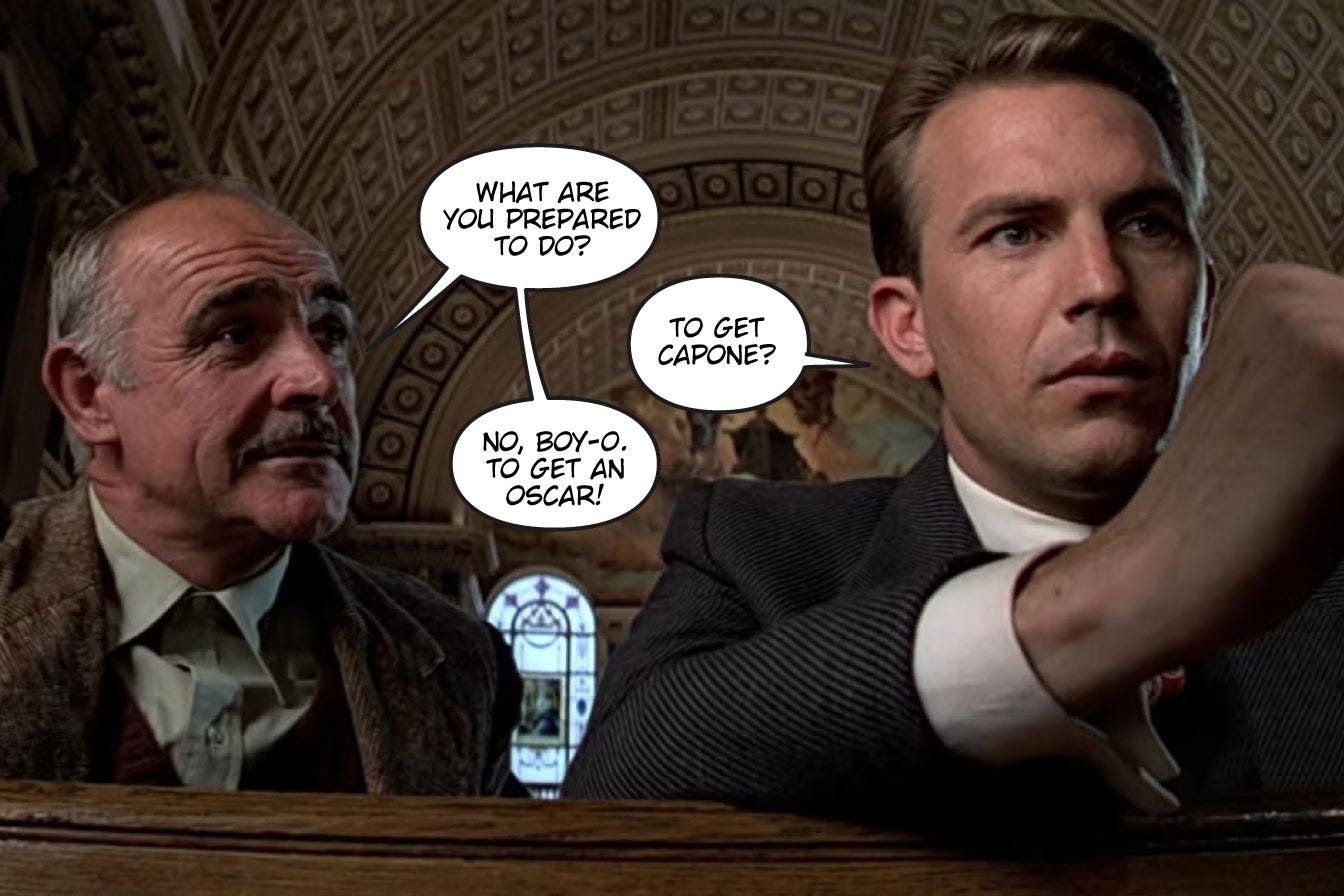
Elliot Ness in The Untouchables is tasked with taking down crime boss Al Capone. You could pitch that, for sure, but it becomes a compelling story when you realize Ness is a Boy Scout and a by-the-book lawman who wants everyone to follow the rules. His dilemma is that the entire system is corrupt, and for him to nail Capone, he will have to cross the line to do what needs to be done. Can he live with it? Now you have a story.
Hopefully, you get the picture. If you have the basic story complication, you have a great blueprint for how to tell your story to someone.
Here’s a little secret that you only find out from doing it. Some people can pitch the hell out of a story, but they can’t write it for shit. It’s a mystery to me, given that a good pitch tells you everything you need to know and more about your story.
Sometimes, a person can write a fantastic story, but crash and burn in the pitching department. This is usually because they are shy, self-conscious, and don’t have the confidence to hold the attention of a room. It can be stressful.
The larger point I’m making here is that writing and pitching are two completely different skills and aren’t necessarily interchangeable.
There will be a time when you find yourself in a meeting with a producer at your side, or a director, and they will pitch something so masterfully that you will beg them to teach you how they do it. It’s like voodoo. They speak extemporaneously without notes and hit every emotional point dead-on.
It’s in moments like this that you realize how magical the practice actually is.
Here is my advice to you. Build rapport. Know your story’s complication. Keep it simple.
There are several types of pitches you may be asked to give. A brief idea pitch, a summary pitch, or the dreaded long-form pitch.

If you are in a general meeting with someone, they will not be expecting, nor will they ask for, a long-form pitch. This is where the idea or summary pitch comes in. It’s the most powerful weapon you have. It is easier to master and leaves your audience wanting more. This is where you can define your lead character, their mission, and the all-important story complication that will hook them.
If successful, they will probably ask you to provide a written summary, which should be good news cuz you no longer have to keep speaking.
The long-form pitch is a nightmare, and I defy anyone to tell me different. It’s where you are called in to pitch your story in its entirety. They want the first act, the second act, and the third act, along with set pieces, turning points, and the finale.

This maniacal form of torture is every writer’s worst nightmare. What to say? What to leave out? Is it too short? Is it too long? By the time you discover the answers to these questions, it will already be too late.
It’s hard to lay out a full story. We will overcomplicate it without trying and fail to trust the material or the audience. Every tiny pause or stumble seeds a deeper level of doubt in the audience, and there is a tipping point when you just know they have checked out completely.
My advice here is to provide a written outline or beat sheet that tells them all they need to know, even if you fuck it up somewhere along the way.
This leads me to the most important reason pitching short-form ideas is so crucial. And I can’t stress this enough.
You are probably pitching your idea to a development executive who is trying to make their bones. They probably suck at pitching worse than you do. So, if you pitch your idea and it’s a little too overcomplicated, muddled, or unclear, imagine what it’s going to sound like coming out of their mouth? Your pitch is only as good as the person who is pitching it to their boss.
The only defense against this is making sure your short-form pitch or elevator pitch is bulletproof. That way, it can be easily pitched up the chain. That means simple, concise, relatable, and complete.
Who is your main character? What is their mission? What is at stake? What flaw will they need to overcome to succeed?
As I mentioned at the top. Most people suck at it. You just need to try to suck less. A lot less.