


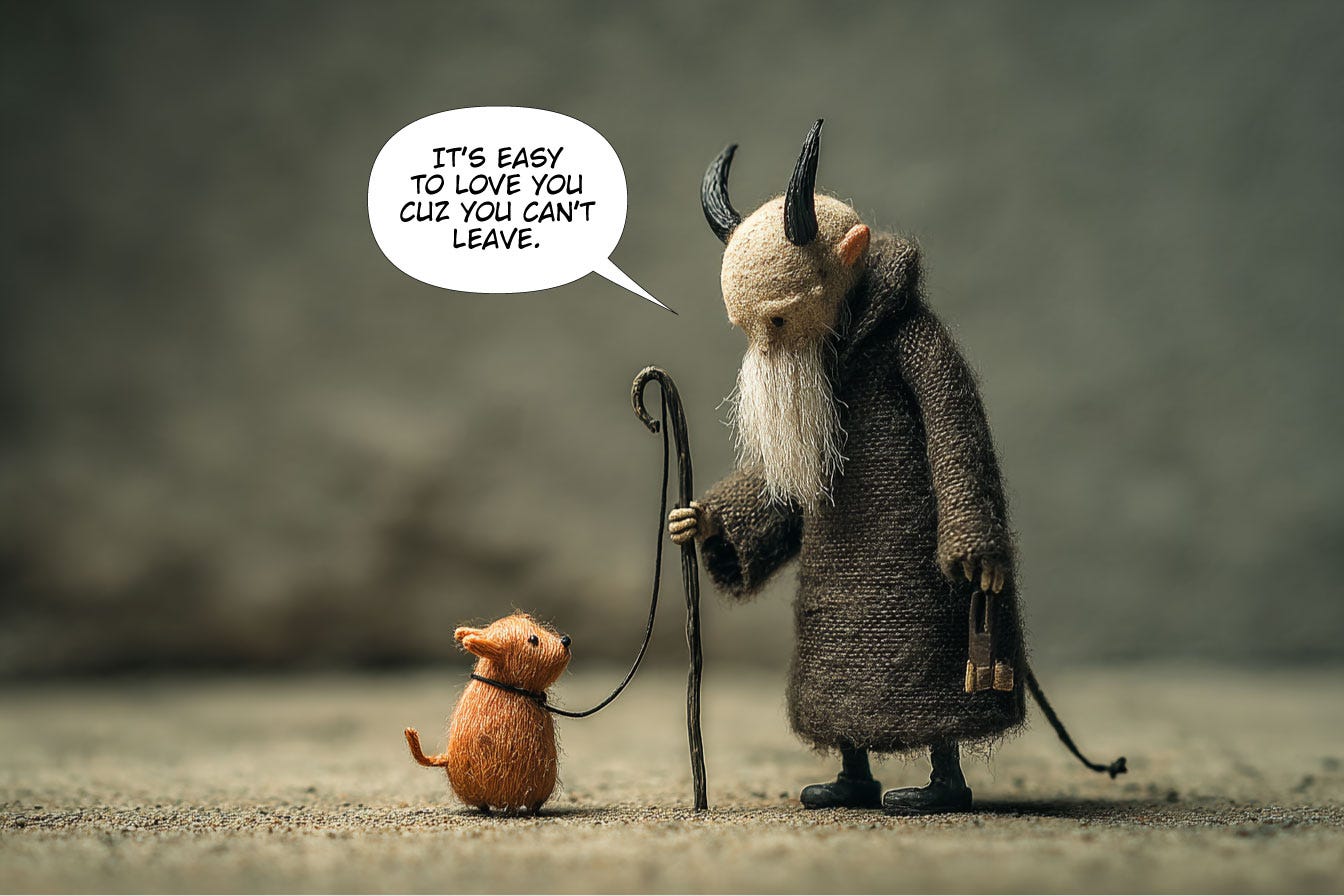
I finally reached the age where the old demon’s deep love for animals, well, it really gets on my tits. That love isn’t new. While we could never have pets in the house growing up, my father seemed to find a new, unconditional love in animals after he left the family home. There were exceptions, of course. We had two budgies as children. They chirped away, night and day, and didn’t seem to bother anyone.
They didn’t have names. We weren’t explicitly forbidden to name them; it just never happened. No one prompted my brother and me to pick names or invest in them in any personal way. When mentioned, they were simply called “bird,” “birds,” or “budgies.”
The budgies are notable in this story for a specific reason separate from my father’s undying love for his own pets. They are touchstones of a dark time in our childhood.
It wasn’t uncommon for my father to come from work and head to the bar for a night out. By himself, mind you. It wasn’t a date night with my mom. Sometimes he wouldn’t even come home from work before heading out. Many times, my brother and I would be asleep before he staggered home.
What happened next was common. After tying one on at his local, the old demon would come home at one or two in the morning and have an immense hunger for something to eat. You know the feeling you get when you leave the bar and find yourself at the drive-thru and order up a half dozen cat food tacos* from Jack in the Box?
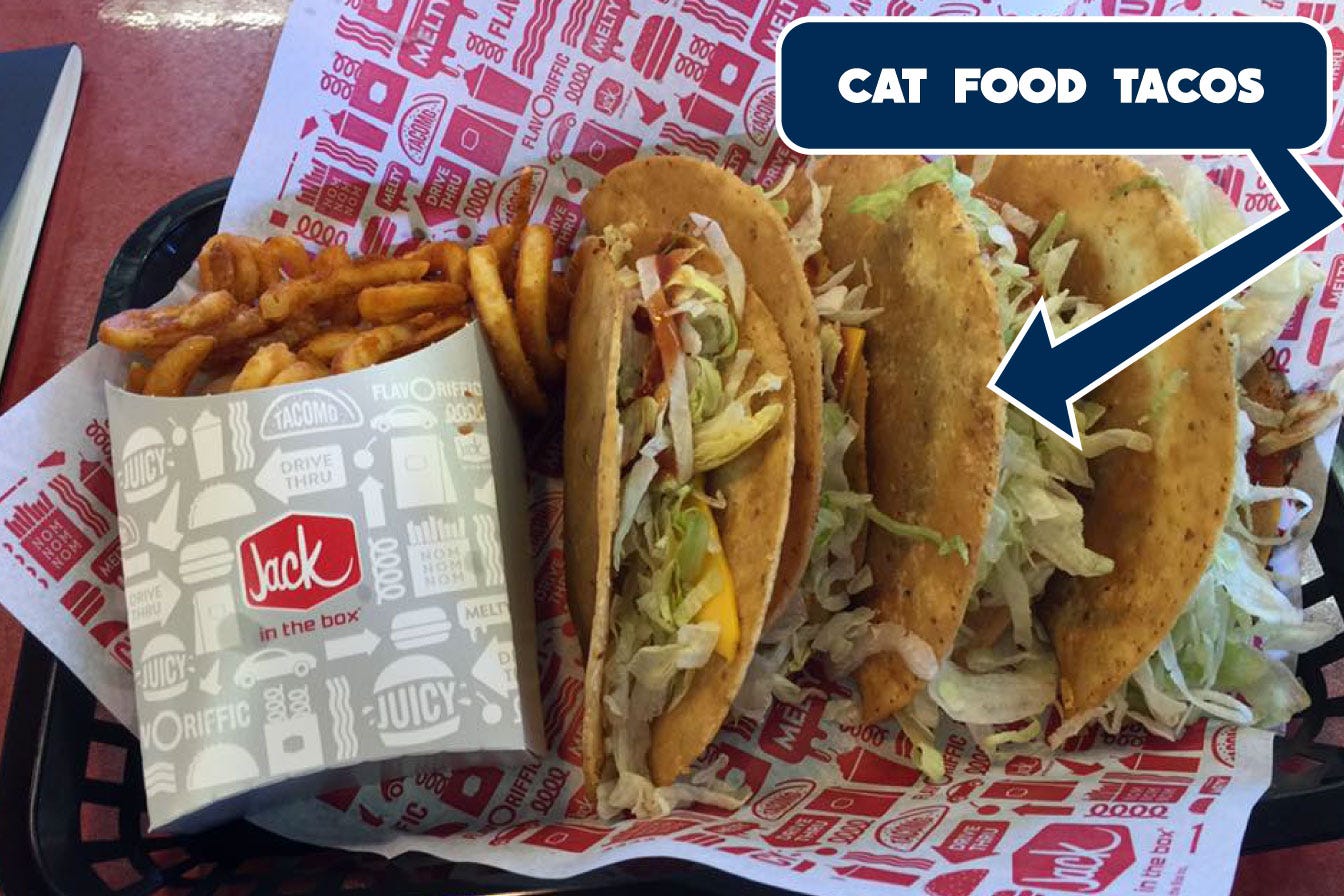
The old demon was too cheap for late-night drive-thru. He would routinely come home hammered and decide he was starving. There was no dinner left out for him. That ship had sailed. Anyway, he would open the freezer and pull out a Hungry Man dinner.
Keep in mind, this was the seventies. Our family couldn’t afford a microwave oven. No, my father would spark up the oven, pop in his Hungry Man dinner, and promptly head to the couch, where he would immediately pass out.
An hour or two later, smoke filled the house. My brother and I would awaken to the sound of my mum yelling at my father about how he’d nearly killed us all.
Mum opened the doors to let the smoke waft out into the early, predawn air. My father, for his part, said little in his defense. It happened, and it couldn’t be taken back.
The creepy part of the story was not the fact that we all might have suffered smoke inhalation. No, we had escaped that immediate danger. The spooky part was the morning after.
When my brother and I got up for school the next morning, my father had already left for work. The house had a distinct smell of burnt food and smoke.
There on the counter, left in plain sight for all to see, was the offending item. The blackened, scorched remains of a Salisbury steak Hungry Man dinner, the aluminum tray intact, its items all in their designated sections. A charred hunk of black processed meat acted as the centerpiece, flanked by mashed potatoes rendered indistinguishable from the apple cobbler. The side of peas was reduced to little more than a pile of little black stones.
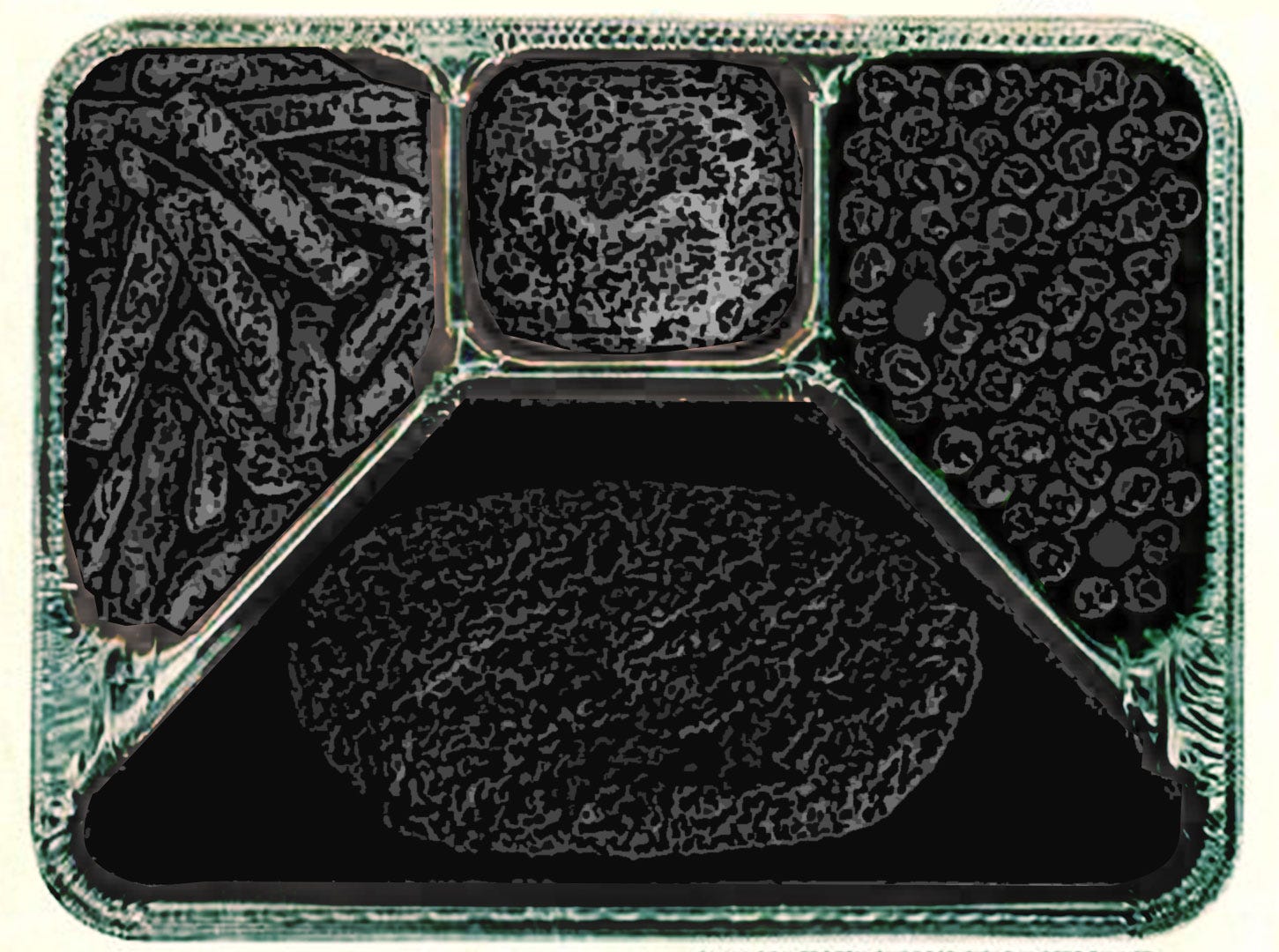
It was as if my mum had left it out on purpose. There was no sweeping it under the rug. No cleaning it up before the world saw it. No, there it stayed as a reminder of the reckless behavior that ruled the days of my childhood home.
But wait, there’s more…
When I walked into the living room, I looked over at the birdcage. I saw only one budgie on the perch. I stepped closer and looked inside the cage. There, lying dead on the bottom of the cage, was one of the two budgies. Its poor lungs couldn’t take the level of smoke in the house and croaked.
You might call this the proverbial canary in a coal mine moment. It should have been a line in the sand about the way we were living.
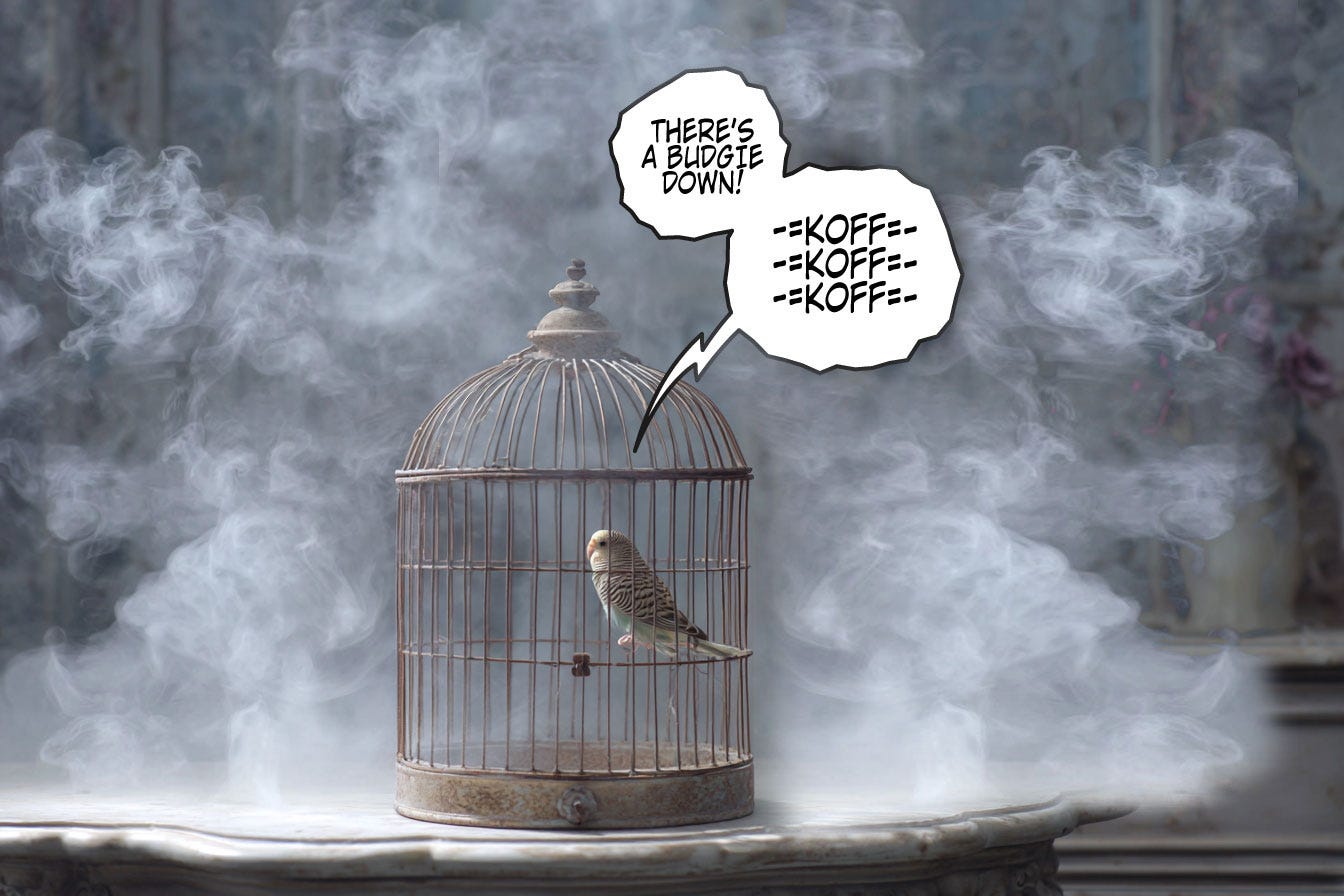
It wasn’t.
Not too long after, the second budgie succumbed to the same fate. My father, half in the bag, threw a Hungry Man dinner in the oven and once again passed out cold on the couch. By now, my parents had installed a smoke detector, and its bleak warble roused us from our slumber. We were safe, but the second budgie was not.
But I digress…
In the years after my parents separated, the old demon developed a powerful love for dogs and tropical fish. So devoted was he to these treasures that he spent hours tending to them. He acquired larger and larger fish tanks, and one dog turned into two.
Along with the great care with which he tended his flock, he bragged about them night and day. “You really need to come back and see the fish tank. I got a new Plecostomus fish.”
Listening to him dote and wax on about them drove me crazy. Here, my brother and I were his living offspring. Nothing was ever good enough for him. We were always being knocked back and brutalized, but those damn fish were amazing, weren’t they? The dogs were so smart. He was so impressed. I’d hear him telling people about them all the time.
The fifty-cent armchair psychologist’s explanation for this phenomenon was that the animals were something you could love on your own terms, and they didn’t put conditions on the relationship. His capacity to love them was never in question, and as long as he fed them, they would remain loyal to him. They would never leave him, so there was no rush to push them away.
Now, in the twilight of his life, the old demon found himself alone. His second wife had passed on after a long illness, and the last two dogs they shared had finally given up the ghost. This devastated him more than he could express. I could see and feel it. I knew well enough not to suggest getting another dog, but something in me knew it was only a matter of time.
When he came around to the idea, he found himself the new owner of a black and white Sheltie. The dog was cute, sweet, and loyal. The question of why someone would abandon such a beautiful and kind pup came up more than once. Then he found out.
He never knew the dog’s history, but he quickly observed a series of strange behaviors in the animal. At times, the dog would become almost like a different animal entirely. It was prone to manic episodes of frantic activity, filled with running around and barking at nothing. It created such a frenzy in the dog that its ears would turn off, and you simply couldn’t talk to it. Then, it would be over, and the dog would return to its normal, loving state. The old demon would refer to this as the dog’s “mad half-hour.”
It also had a penchant for stealing my father’s things and dragging them out to his large backyard. Shoes, slippers, and TV remotes were just a few of the things he would abscond with to his domain.
Yet, my father remained unmoved and permissive. The dog could do no wrong. The dog stole a shoe. “Aw, that’s okay. He’s just being a dog.”
The dog shit on the floor again. “I can’t be mad at him. That’s my fault.”
When the phone rang, and my father told me about how the dog had stolen and eaten an expensive pair of hearing aids I had acquired for him, he laughed. I was furious.
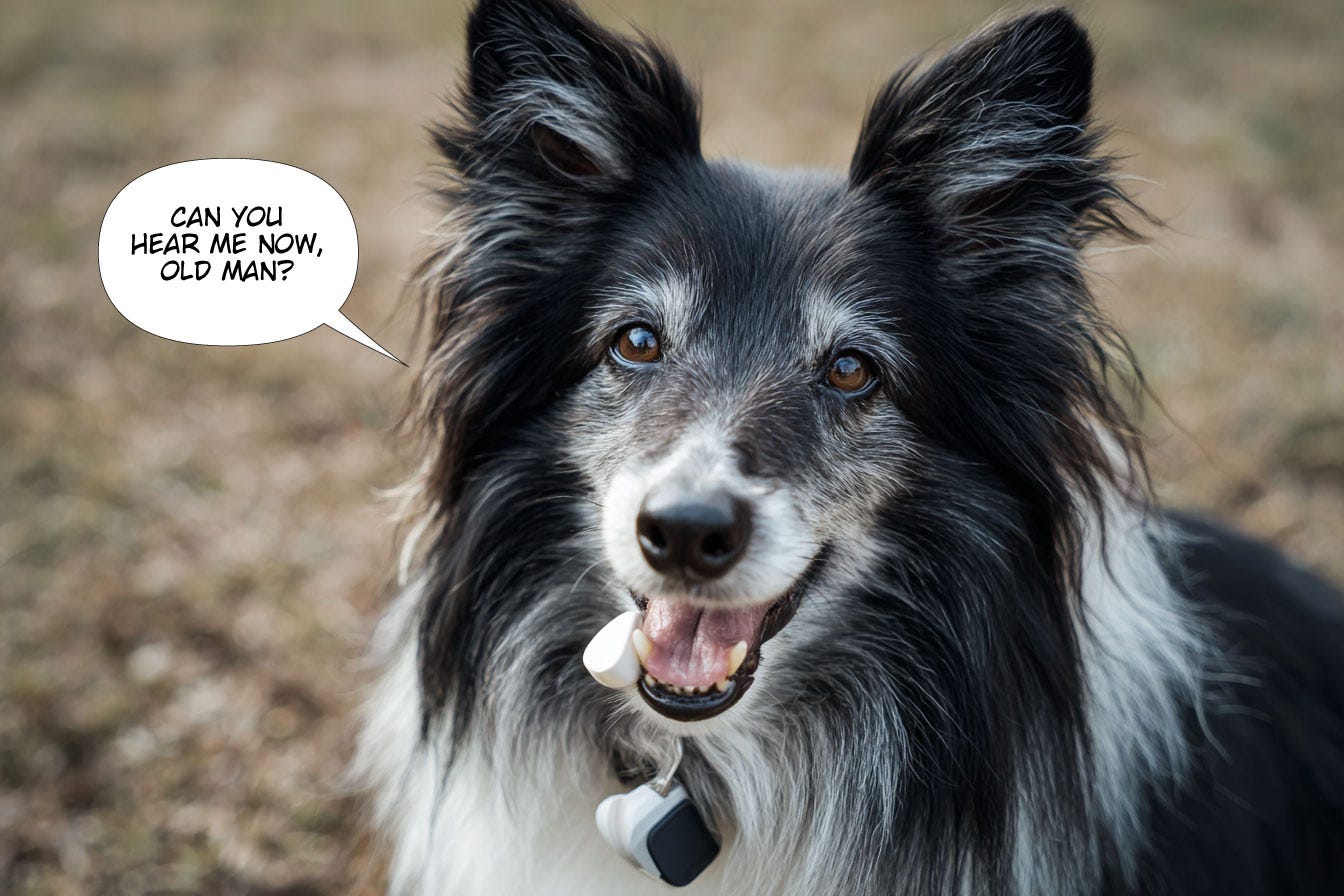
His answer? “He’s just my wee pal. I can’t be mad at him. He doesn’t know any better.”
I wondered where all of this compassion was when I was a child. It really beggars belief that he never put it together. He treated animals with so much care and compassion, but had very little for his family.
If I’m honest, it heartened me that he developed such a strong connection to the dog. The bond humanized the old man. Every time he returned home and saw his little dog, he would say, “There he is! The wee guy!”
Seeing his genuine joy showed me his capacity for love, even if it was buried beneath a mountain of his own childhood trauma. It wouldn’t surprise you to learn that my father’s childhood was no picnic.
Have you noticed I haven’t given you a name for the dog in this story? It has a name, but he’ll remain anonymous for the duration of this story.
While he is a crazy dog, he is a gentle, loving animal that I have grown to love despite everything. During the time the old demon was hospitalized, I took the dog to my house. There, he displayed none of the madness that my father permitted. He didn’t bark maniacally; he didn’t work himself up into a frenzy, and didn’t display his usual neuroses.
Why?
I don’t know. I think maybe he just adapted to his environment. After one particularly stressful hospitalization, where I looked after the old demon and his beloved dog, I finally got him home. He sat down in his armchair, and I saw him glassy-eyed and weepy.
“Are you okay, Dad?” I asked.
He broke out of a short reverie and looked me in the eye. As single, solitary tears rolled down his face, he said, “I don’t know what I’d do…”
There was a pause while he pulled himself together.
“…without my dog. I’d be lost without him.”
“I know,” I said, feeling invisible, “I know.”