



Does Art Really Need to Meet Commerce?
The short answer is no. The end. Thanks for reading.
The longer answer is more complicated. Artists of every stripe have been saddled with this dilemma for centuries. The sheer nature of art comes from a place that transcends sales, money, and brand recognition. It is a singular entity.
The issue only arises when you intend to share your work. Sure, you can share it for free, and many do. We live in a world now where most forms of art comprise ones and zeroes, and the desire to own physical media has all but vanished.
I come from a generation that collected forms of art. Paintings, pictures, movies, music, and everything in between. It was a point of pride to own a vast collection of, well, anything.
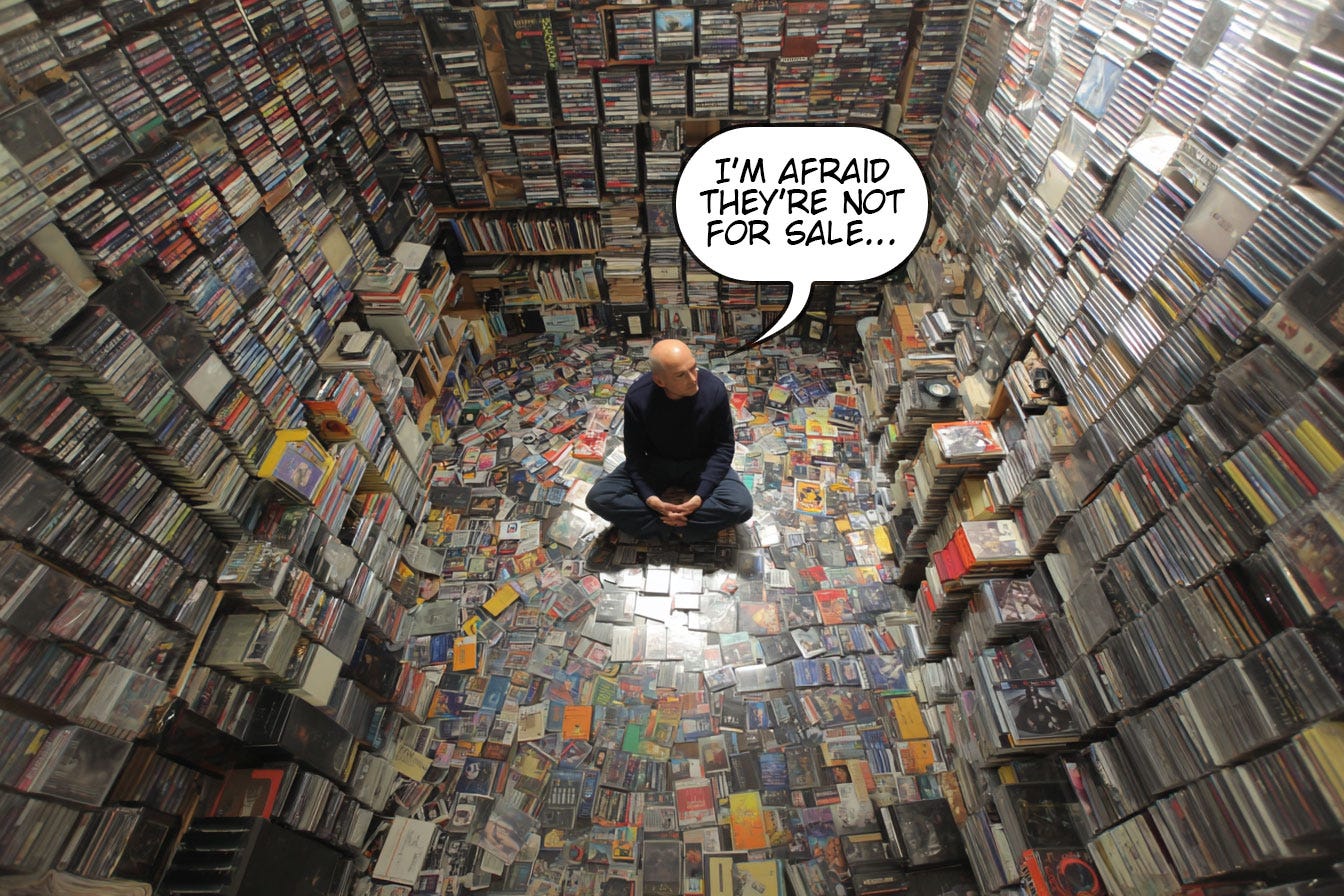
I had thousands of books and CDs. I had boxes of movies, some bought many times in each new and updated format.
People no longer need those physical things. My generation even thought it was necessary to own the digital format of media. The next generation just wanted it for free. Why should they have to pay for it? They know somebody is struggling to get their art seen in the commercial space, but they feel like it shouldn’t be them who has to fork over the money to have it.
This latest generation doesn’t even want to own anything. The idea of having to carry around the physical media they enjoy is foreign to them. Access to the internet is enough for them.
There is a point to this tangent, if I can pull it all back together. I think it is important to understand how art has been delivered over the last fifty years to get a sense of the connection between art and commerce in the modern world.
The internet and the technology that came with it have offered artists many more ways to express themselves and share their creations with the world. If you are willing to share them, you can reach the entire world in an instant. That you would give away your creations to the entire world for free in the snap of a finger is both amazing and frightening.
Now, labels, producers, and promoters encourage artists to divest themselves of their goldmine because if they don’t, they might just get left behind.
An unpleasant side effect of this instant delivery is that it transforms your art into an ubiquitous commodity, so plentiful that it devalues itself and absorbs quickly into the torrent I call “sea of everybody.”
My guess is, if you are reading this, you are not in the Emily Dickinson camp where you intend to write in secret for a lifetime, and it’s anyone’s guess if the world discovers your brilliance after you’re gone. However, if that is the road you choose to travel, then embrace that to the fullest extent you can.
I suspect you probably want a wider audience to see your work and want to be paid for the work you do, so your work must transform within this narrow intersection where all true art is alleged to die.
Here’s the tricky part. If I say to you that the intersection of art and commerce requires a set of broad rules and expectations, you will surely point out a highly successful writer, director, etc., who has blazed a singular path so out of the mainstream that you believe this proves you can be as out to lunch as you want and still make a big success.
Maybe. There are plenty of people in aggregate who have succeeded this way, but the air is even more rarefied up there.
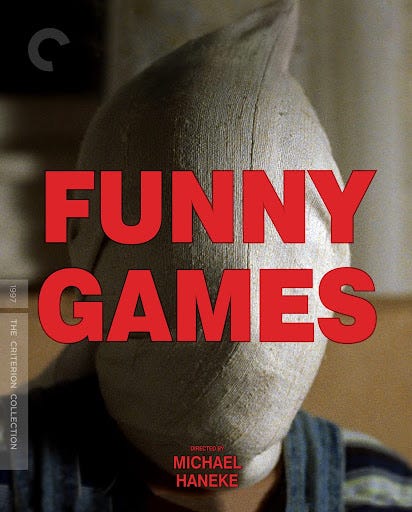
Michael Haneke, for example, wrote and directed a collection of movies that are, at best, difficult to watch, and at worst, horrifying examples of trauma on screen. This is not a judgment of his work. He is a singular voice that has carved out for himself a fanbase that respects the work he does. Check out his films, The White Ribbon, Funny Games, and Cache for examples.

Similarly, Lars Von Trier is seen by many as the enemy of fun. His films are provocative, challenging, and hard to watch. He is not interested in providing you with a fun time for the whole family. No, he is trying to show you something truthful in a way that people would normally turn away from. Check out any of his films. Dogville, Antichrist, Dancer in the Dark, and Breaking the Waves are all powerful downers.
Even the great Paul Schrader, who penned films like Taxi Driver, Hardcore, and Raging Bull, was not looking to deliver feel-good movies. He deals in painful, raw emotion, and the ways human beings destroy themselves trying to make sense of, or completely avoid them.
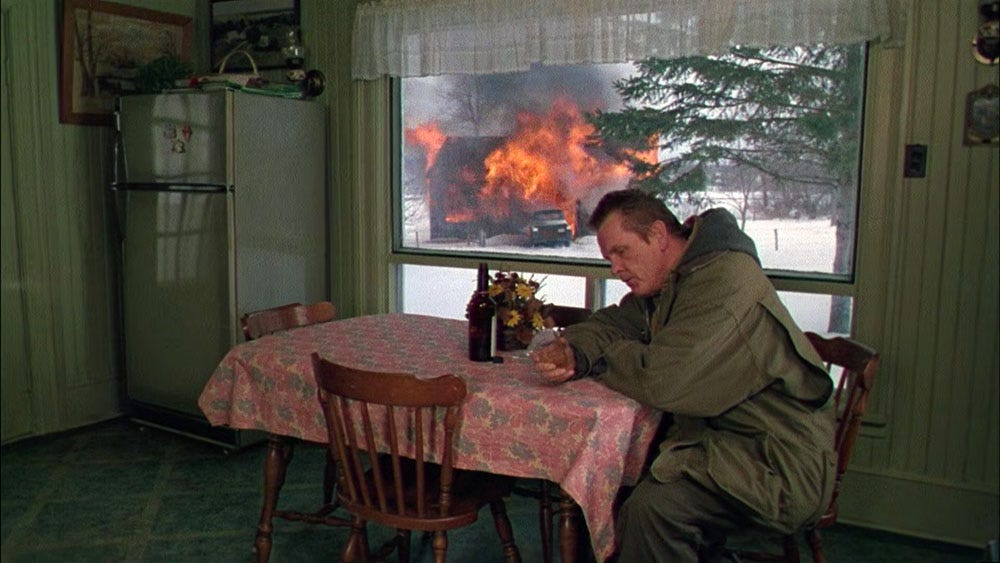
Even his fantastic adaptation of Russell Banks’ novel Affliction is a stone-cold, spine-tingling descent into unspoken family trauma being dragged out into the light and paraded around for the entire world to see long before his characters have had a chance to deal with it.
These are all great examples. When I watched Uli Edel’s adaptation of Hubert Selby Jr.’s book Last Exit to Brooklyn with a script by Desmond Nakano, I remember being horrified as I left the theater. It was 1989, and when I asked my buddy what he thought, he said he hated it. I wanted to say that I hated it, but I couldn’t.
“I feel like I need to wash my hands,” is all I could say. It made me feel dirty.
Some people believe that movies should simply entertain, not preach, and definitely not end on a downer. Something occurred to me as I walked to my car. The movie left me feeling dirty and sad, but wasn’t that what the writer and director wanted me to feel?
Well, he succeeded, and I recognized that as an important milestone. You don’t have to feel good about the story. The important thing is that you feel something.
Permit me to go further down the rabbit hole. I will share a story with you about the end product of being made to feel something through art.
Reviews.
I have had the good fortune to have some film, tv and comic book projects make enough of a splash in the marketplace that reviews were written. Many reviews. I know a lot of artists who don’t read them, and I respect that.
I’m not like that. I will read them, but I look at them differently than most people. When I wrote a series of comic books based on the Evil Dead film franchise, I knew their fan base would be brutally honest. They are fiercely loyal to the films and the main character. You could be sure they’d throw in their two cents.
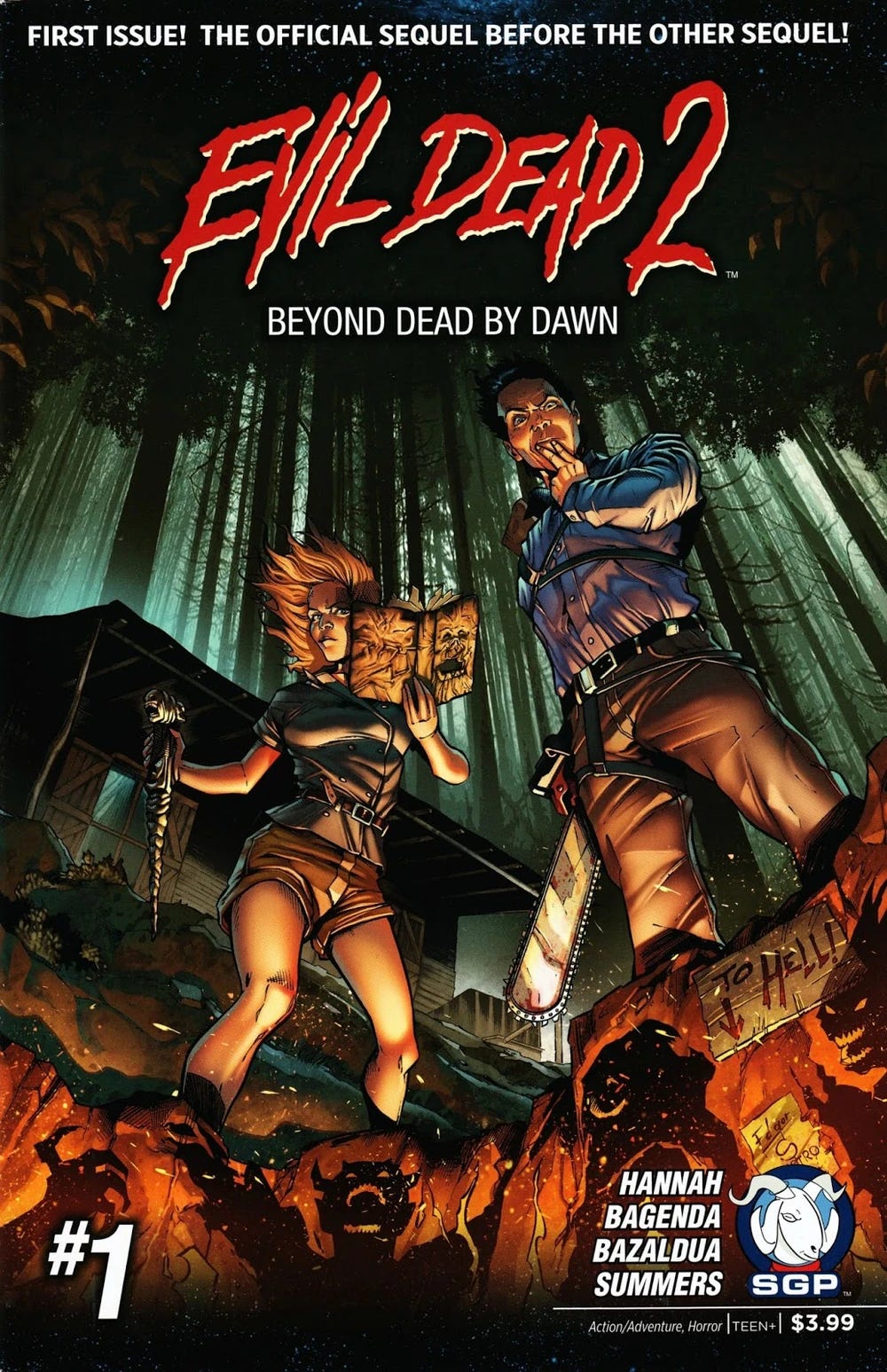
One review would sound something like this. “Frank Hannah’s Evil Dead 2 comic series is the greatest adaptation of the films ever printed.”
Wow. Thanks for that. It’s nice to read, but my knee-jerk response is dismissive. Not the compliment, but the extreme nature of the review. They liked it. Good. Is it the best thing they’ve ever read? Hardly. When I read reviews like that, I simply don’t believe them. I think it’s nice, but I’m not likely to get high on my own supply.
Sometimes, the reviews sound like this…
“That comic book written by Frank Hannah is the worst piece of shit I have ever read. He should stick to what he’s good at, which is toiling in obscurity.”
Ouch. How mean. Ha. The truth is, I don’t care about these types of reviews either. I don’t believe it’s the worst any more than I believe it’s the best. They kind of cancel each other out.
In the end, if you really want to cut me to the quick, simply write a review that says you felt nothing. If your thoughts on my work can be summarized into the word “Meh,” then I will definitely feel wounded.
It says I didn’t do my job. This is the worst outcome of all. Most people who write reviews are more bombastic and extreme, so I’m completely happy with those “off the deep end” responses.
If your primary goal is to move people emotionally with your work, then the commerce part of the equation will depend greatly on whether you intend to make your audience feel good or feel bad.
The best advice I can give you is to find a balance between the hard-to-swallow moments and the feel-good moments mainstream audiences expect.
Remember, this advice pertains only to the art meets commerce part of the conversation. Your creative work is not bound to this. I think we need people who write material that forces us to look at ourselves in a way that is uncomfortable.
I had a teacher at UCLA who believed stories should strictly be entertainment. When someone pitched her difficult material, she would hold her hand up with her thumb and forefinger inches apart and say, “That’s a small story…”
It was so dismissive; it pissed off a lot of people in the class. Knowing what I know now, I can see that she was trying to instill a commercial sensibility in the class, but it certainly rubbed us all the wrong way.
One last story that encapsulates this concept perfectly.
Many years ago, I was pitching an edgy comedy called The Paradise Ranch around town. It was a story about a straight-laced U.S. Marshal who is tasked with running a seized business while the criminal case tied to it is handled by the Department of Justice.
There is an interesting rule about seized assets. If, for example, the DEA or IRS charges the owner of a dry cleaning business with racketeering or tax evasion, then the authorities seize the business from the owner, but the authorities must run the business at the same profitability or better than when they seized it. That way, if the prosecutors cannot make their case, they can hand the business back to the owner intact.
Running seized assets is the purview of the U.S. Marshals Service. They are a custodial agency that transports prisoners, hunts fugitives, and manages seized assets.
The asset in my story was a legalized brothel in Nevada. So, now a Dudley Do-Right marshal must get his hands dirty in the day-to-day operations of the brothel. To help him in this endeavor, he located a pimp he placed into witness protection after testifying against the mob. The story about the lives of the working girls and the uptight U.S. Marshal was filled with comedy set pieces, raunchy sight gags, and all-around comedy moments.
One such pitch meeting was with the legendary producer Lawrence Bender. I thought to myself, this is Quentin Tarantino’s guy! He is going to eat this up.
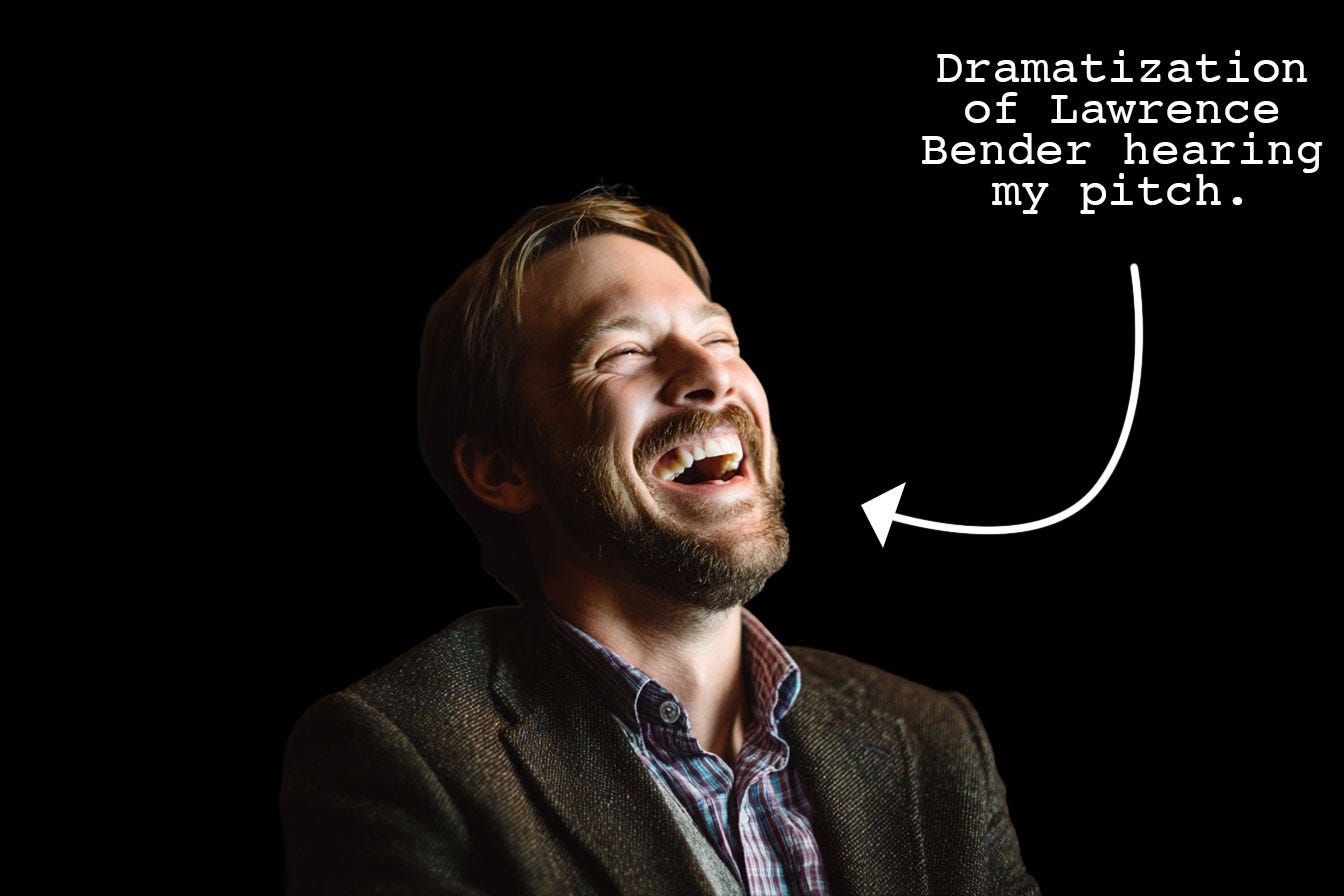
So, I began my pitch and almost immediately he is laughing. And laughing. And laughing. It couldn’t possibly have gone any better than it did. He responded to all the right jokes, and he got a clear sense of what I was trying to achieve. When I finished, I sat back and waited for his response.
I swear, he wiped the tears from laughing so hard from his face. I’ve never been more sure of myself than I was in that moment.
“So, what do you think?” I asked.
“It’s very funny,” he said. “Very funny.”
I sat there waiting to hear more. I was on the edge of my seat. Then he said the following words…
“But does it have to be a brothel?” He asked. “What if it’s a Dairy Queen or something and it’s kids working there?”
I was stunned. I tried to speak, but no words came out. I cleared my throat and intended to ask for clarification, but I shit you not, here’s what came out of my mouth.
“You are Lawrence Bender, right?”
He immediately laughed again. He wasn’t offended. The meeting ended, and I can’t say I can remember much about our conversation before I left.
What has become crystal clear to me now is that even the great Lawrence Bender knows that art and commerce have to meet at some point, and it would be a damn sight easier to sell a Dairy Queen with kids to the studios than a story about a brothel and hookers with hearts of gold.
Now, could a bigger-name writer get my version made? Perhaps. I was no one special. I was just a young writer who showed up with a particularly tough rock to push up a hill.
Did I think my script was commercial enough? Yes, I did, but I wasn’t on the front lines convincing the rest of the machine it was worth the effort. I saw this as a lesson that he didn’t know he was teaching me.
Can I blame him? No. We want to think it’s all personal, but it’s really not. He is in the business of getting movies made; he probably had a long list of difficult rocks he was currently pushing up a hill, and he didn’t need another.
He also might have had a mandate. It’s good to know that if the mandate of a producer is to find broad comedies, you don’t go in with something too niche or in the wrong genre altogether.
In summary, art does not need to meet commerce if you don’t want it to, but the more people you want to see it, the more likely you will be asked to conform to the rules of play in the marketplace. You know, Dairy Queens and kids.
Thanks, Scheub! It’s the eternal struggle!
Such a great topic, well delivered. I’ve missed our conversations about stuff like this, maybe because it always made me simply “feel.” Has to be a brothel.